From 2018-2024, the Seafood-Energy-Water-Waste Nexus project brought together a multidisciplinary, multi-university team of scientists to strengthen knowledge of the U.S. seafood supply chain’s resource efficiency. We tracked the globalized seafood supply chain from points of origin to plate, estimating water and energy usage and waste generation, and studying key drivers and opportunities for greater efficiency. The findings support industry, decision-makers, advocates, and researchers. This project was supported by the US Department of Agriculture.
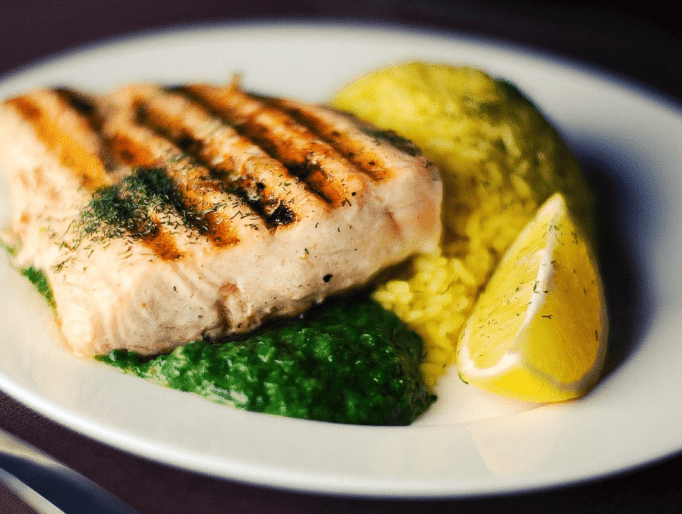
Our multi-university team has gathered the most comprehensive information available on energy use, water use, and waste across the U.S. seafood supply chain. Seafood systems play an essential role in meeting the increased demand for healthy foods and reducing the stress of food production on energy and water resources. Given current and future resource limitations, we need to produce seafood (and all foods) as sustainably as possible. Getting there requires an understanding of the amount and drivers of energy and water use, and of waste, in seafood production. Previously, that information was often difficult to compare and outdated, and was highly incomplete.
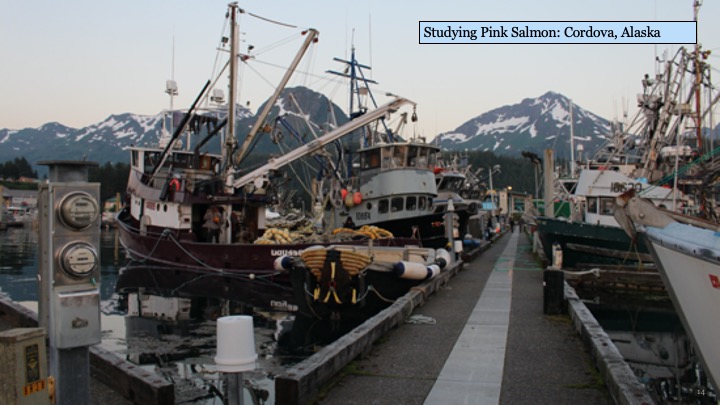
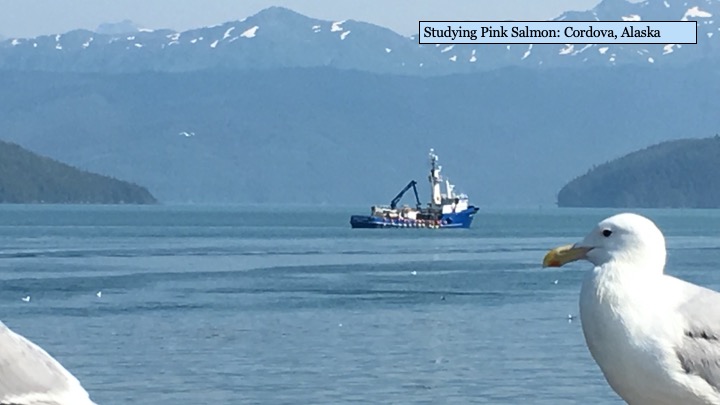
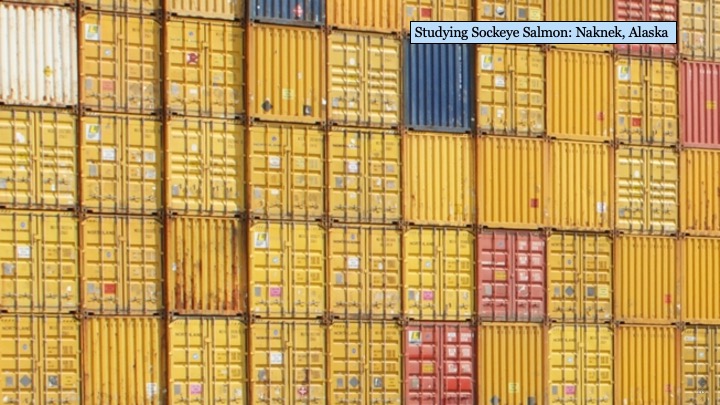
To fill that gap, our team traveled to key domestic and global spots where seafood is produced and processed. We collected data from companies working all along the supply chain in aquaculture (farmed seafood) and wild-caught fisheries, as well as from retailers, restaurants, and consumers. We combined this primary data with trade data and evidence from existing literature. Finally, we estimated resource use and waste across the seafood supply chain, gained insights into how these amounts differ across supply chains and supply chain stages, and modeled potential impacts of various responses. Complementing the quantitative data, our team performed interviews with companies, experts and consumers across the supply chain to supply the essential context. Accordingly, our research describes factors that influence seafood resource use and waste (including seafood bycatch), and opportunities for greater efficiency.
This website shares results from across the project and provides links to our peer-reviewed papers and summary briefs. This project was supported by USDA Award #2018-67003-27408. 2018-2023.
Why is seafood waste and resource use important?
Health professionals recommend that we eat a lot more seafood—about twice what Americans currently eat on average. While this may be good health advice, it’s alarming from a production and environmental perspective, as food production is tightly coupled to resource use.
Harvesting seafood from the wild is expensive and requires significant energy to power fishing vessels. Farmed seafood (aquaculture) requires a great deal of energy, water, and feed to grow fish in controlled environments. As a highly perishable product, seafood requires cold storage from start to finish, using further energy. When seafood is lost or wasted, the resources that went into production, processing, and distribution are lost as well. As seafood demand grows, this environmental footprint will also grow. Seafood overall has a lower environmental impact than many land-based protein sources. Nonetheless, in this time of constrained resources and severe environmental threats, efficiency and sustainability are imperative, and require focused efforts.
This project contributes to a body of research focused on the Food-Energy-Water nexus. Nexus thinking means not only studying food, energy and water systems on their own, but also as they intertwine. Our research explores intersections and tradeoffs between seafood, energy and water systems, and the ways in which changes in any one of them can have major implications for the others.
Our approach
This Seafood-Energy-Water Nexus project worked to identify the best opportunities for resource savings in seafood and to provide a better understanding of where and how water and energy are used throughout U.S. seafood supply chains as well as how and where seafood is wasted. The initiative brought together more than a dozen scientists across four institutions who have worked closely with the U.S. seafood industry to gather data on the top ten consumed species in the US, such as shrimp, salmon, and catfish. We gathered resource use and waste data from fishers, fish farmers, processors, distributors, retailers, restaurants and consumers – starting across the globe where key species in the U.S. seafood supply are produced and tracing paths all the way to our plates in the US. In addition to collecting quantitative data to support modeling, we also performed qualitative interviews to gather insights from these businesses and other experts regarding reasons for resource use and waste, opportunities for improved efficiency and sustainability, and other related insights and perceptions. We also performed case study research to provide an in-depth view of selected solutions. We used lifecycle assessment and other modeling to analyze the quantitative data, and qualitative data analysis to analyze interviews. Lastly, we are communicating our findings with industry, decision-makers, and consumers.
What we learned
The research has provided the first comprehensive study of resource use and food waste in the U.S. seafood system. Following are a few top findings, each with significant implications for prioritizing future efforts. For more detail, see the articles and summary briefs linked below.
- In the US aquatic system, producing one kg of edible seafood requires 96MJ of energy and 170 liters of water. This energy use is higher than most land products, however aquatic foods are more water efficient than animal proteins.
- We found particularly high environmental costs associated with air transport of fresh seafood products. Fuller accounting of and communication of the environmental costs of air transport may support shifts in modalities.
- 23% of the U.S. seafood supply is wasted each year, with the most waste at the producer and consumer levels. While this waste rate is in line with waste of other perishable food products, seafood’s high resource footprint makes its waste particularly impactful. Further, by the time seafood has reached consumers, it has required resource inputs all along the supply chain, thus increasing the harm of wasting seafood at that late stage. Consumer-focused seafood waste interventions should thus be emphasized.
- Producing fish feeds accounts for nearly a third of total energy use in aquaculture products. Working to improve sustainability of fish feed production and feed conversion ratios can reduce this footprint.
- Farmed and wild-caught seafood in the U.S. are primarily dependent on fossil fuels, and different production sectors face distinct challenges in shifting to renewable energy. Land-based production and processing rely heavily on the regional electric grid. The high costs of shifts to on-site renewable energy suggest that broader changes in the regional electric grid may be necessary to facilitate the shift to renewables. Capture fisheries will remain dependent upon fossil fuels to power vessels until alternative fuel technologies become more available and affordable. .
Achieving these improvements requires a systemic approach. Tying the reduction of waste and resource use to existing organizational goals or other operational efficiencies may help galvanize organizations to implement waste reduction strategies.
Research Team

Roni Neff (Principal Investigator) Associate Professor, Department of Environmental Health & Engineering (EHE) and Center for a Livable Future (CLF), Johns Hopkins Bloomberg School of Public Health (JHSPH); Dave Love, Research Professor, EHE, JHSPH and CLF; Liz Nussbaumer, Project Director, CLF; and Erin Biehl, former Program Officer, CLF. Research Assistants: Hannah Grant, Emily Hennessee, Tetyana Pecherska, Gabriela Sarmiento, Rachel Scroggins, Catherine Turvey, Ruth Young, Emma Yu.

Mark Brown, Professor Emeritus, Environmental & Engineering Sciences, University of Florida (UF); Frank Asche, Professor, Natural Resource Economics, UF; Jim Anderson, Professor, Food & Resource Economics, UF; Ly Nguyen Assistant Professor, Agriculture & Resource Economics, Texas A&M (former postdoc), Silvio Viglia, Researcher at ENEA – Italian National Agency for New Technologies, Energy and Sustainable Economic Development (former postdoc), and Taryn Garlock, Assistant Professor, School of Fisheries, Aquaculture & Aquatic Sciences, Auburn University.

Lekelia Jenkins, Associate Professor, School for the Future of Innovation in Society, Arizona State University (ASU); Stacia Dreyer, Assistant Research Professor, ASU; Gabrielle Lout, Social Responsibility Program Manager, Ocean Outcomes (former PhD student).

Jillian Fry, Assistant Professor, Public Health, Towson University
The researchers worked with aquaculture and fisheries industry representatives, seafood supply chain businesses, regulators, advocates, and consumers.
Gallery
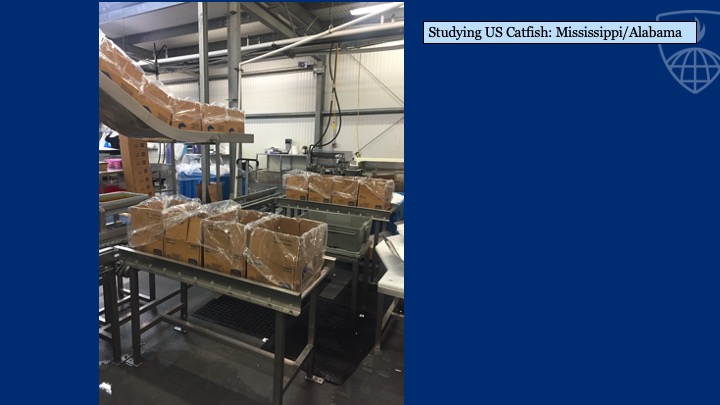
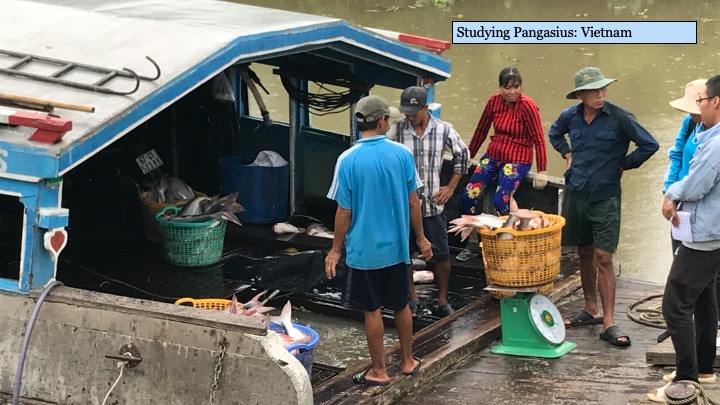
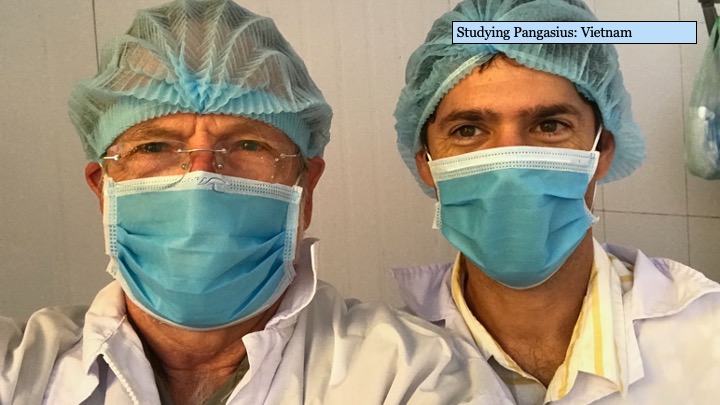
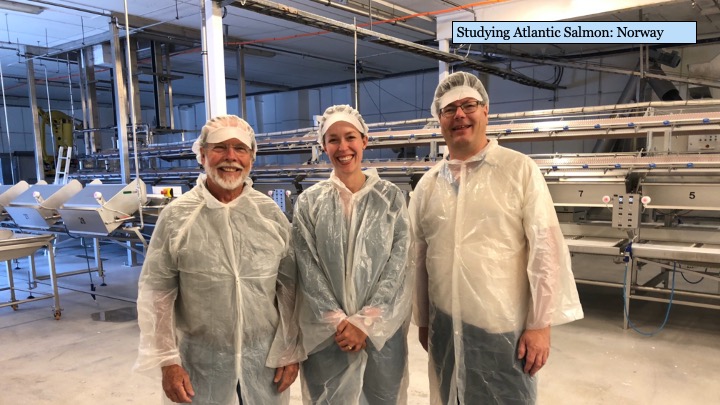
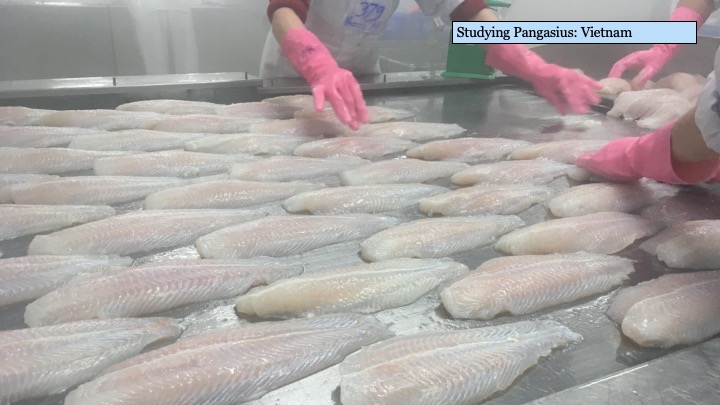
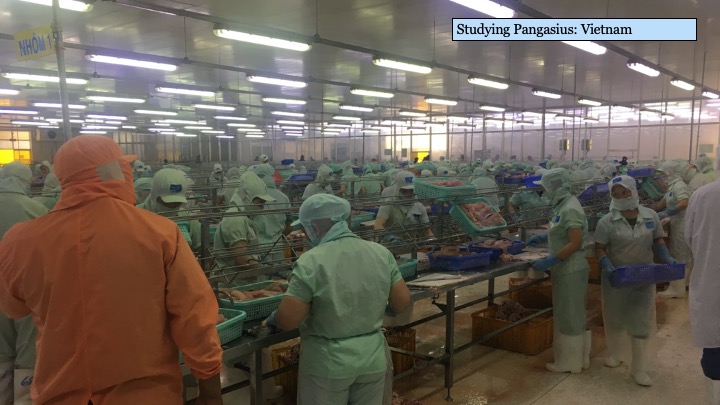
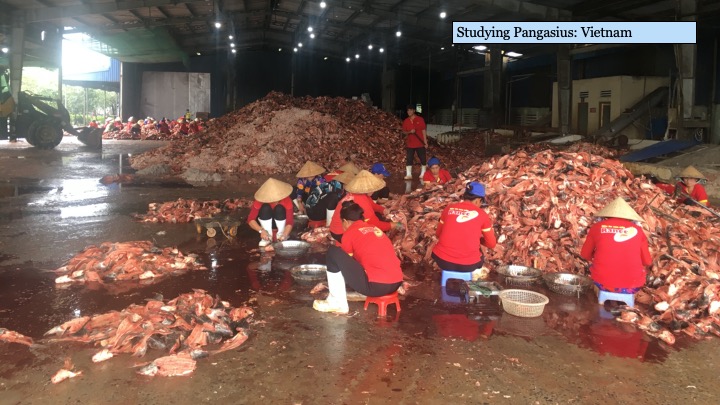
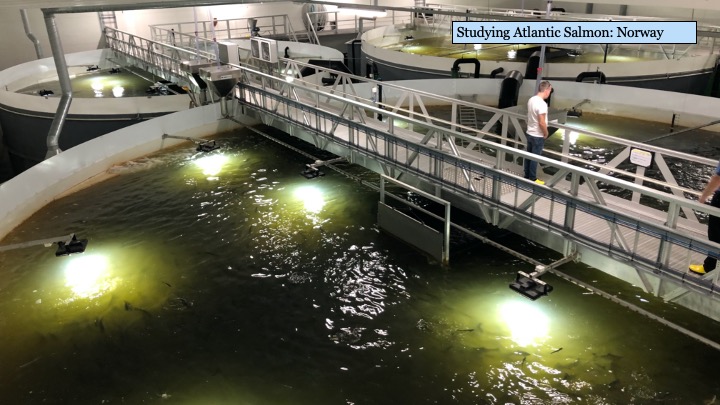
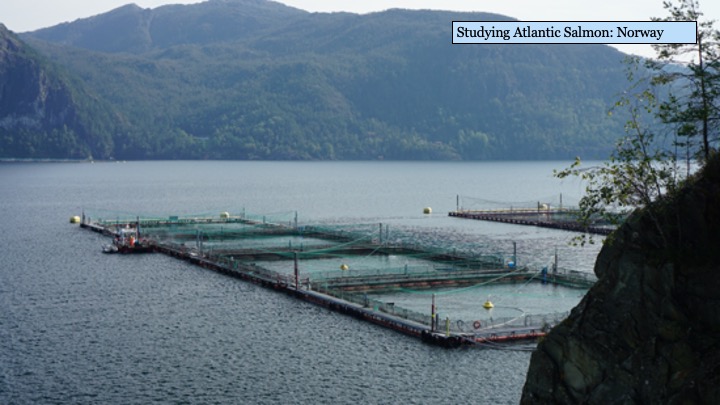
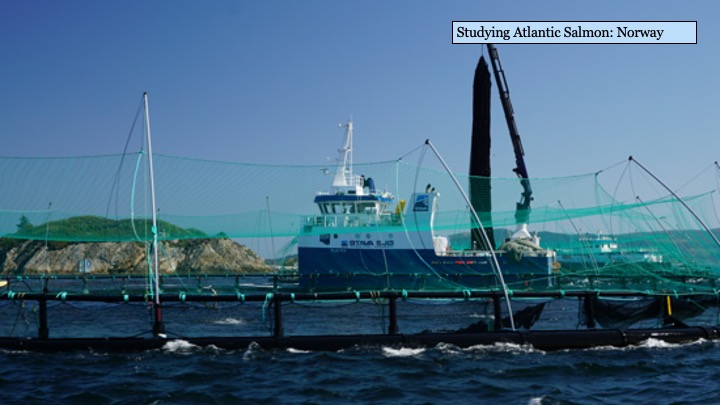
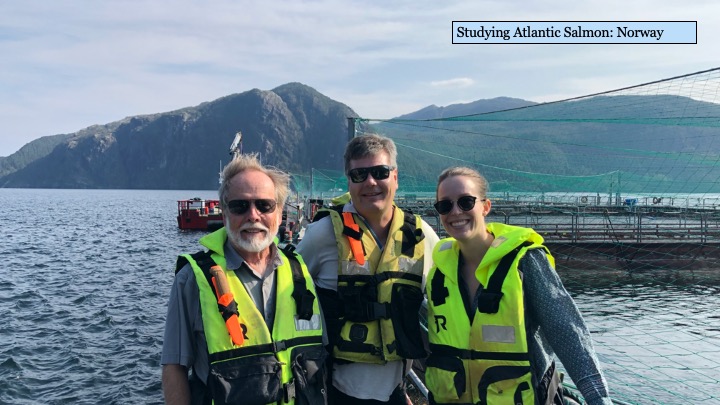
More about the Project
Study Summaries
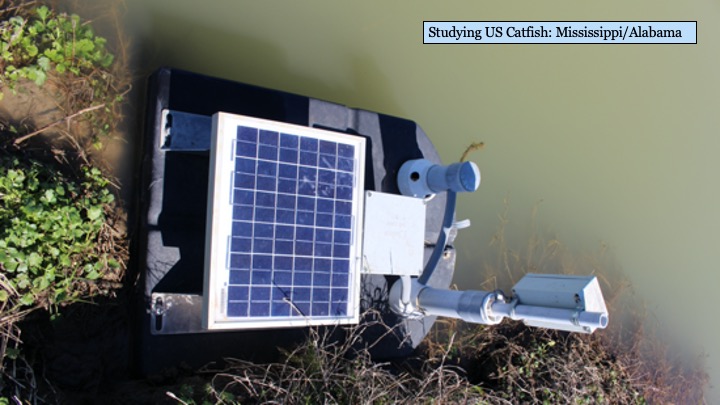
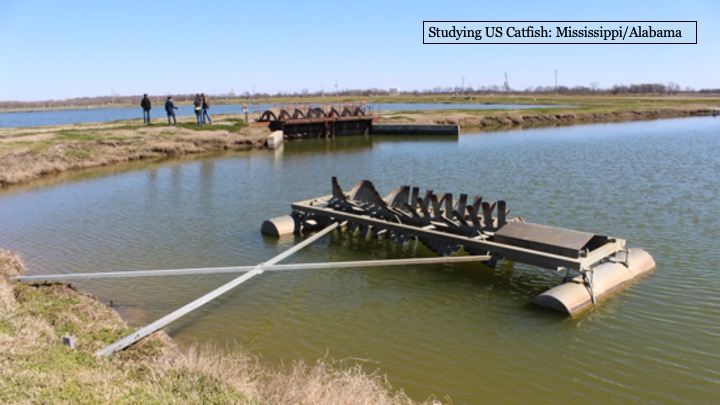
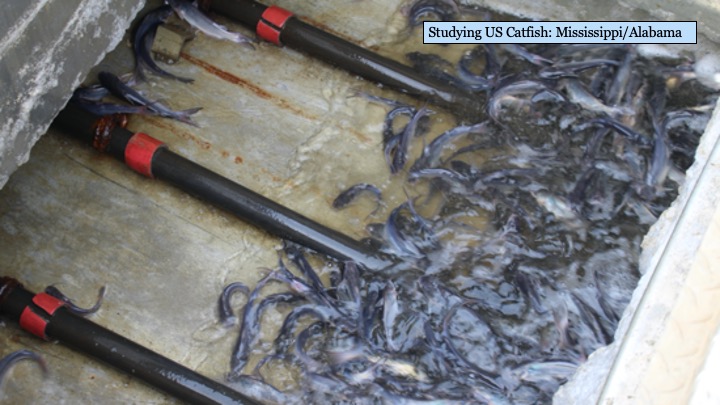
- Energy and water use in U.S. farmed catfish (2022)
- Renewable energy in fisheries and aquaculture: Case studies from the United States (2022)
- Energy and water use in the Alaska sockeye salmon fishery (2022)
- Measuring the energetic contributions of the environment to salmon production (2022)
Publications
The eleven articles below most closely address our core research questions. Stay tuned for several more articles under review! (View the full list of 27 journal articles from the Seafood-Energy-Water Nexus project.)
- Fry JF, Scroggins RE, Garlock TM, Love D, Asche F, Brown MT, Nussbaumer E, Nguyen L, Jenkins LD, Anderson J, Neff RA. 2024. Application of the food-energy-water nexus to six seafood supply chains: Hearing from wild and farmed seafood supply chain actors in the U.S., Norway, and Vietnam. Frontiers in Sustainable Food Systems. V7, January.
- Love D, Asche F, Fry J, Nguyen L, Gephart J, Garlock T, Jenkins L, Anderson J, Brown M, Viglia S, Nussbaumer E, Neff RA. 2023. Aquatic food loss and waste rate in the United States is half of earlier estimates. Nature Food 4, 1058-1069.
- Viglia S, Brown MT, Love DC, Fry JP, Scroggins R, Neff RA. 2022. Analysis of energy and water use in USA farmed catfish: toward a more resilient and sustainable production system. Journal of Cleaner Production. V379, Part 2, 134796.
- Jenkins LD. 2023. Turtles, TEDS, tuna, dolphins, and diffusion of innovations: Key drivers of adoption of bycatch reduction devices. ICES Journal of Marine Science, 80(3):417-36.
- Jenkins LD, Eayrs S, Pol MV, Thompson KR. Uptake of proven bycatch reduction fishing gear: perceived best practices and the role of affective change readiness. 2023. ICES Journal of Marine Science. 80(3):437-445.
- Scroggins RE, Fry JP, Brown MT, Neff RA, Asche F, Anderson JL, Love DC. 2022. Renewable energy use in United States farmed catfish and wild-capture salmon production. J of Cleaner Production. V376, 134153.
- Brown MT, Viglia S, Love D, Asche F, Nussbaumer E, Fry J, Hilborn R, Neff RA. 2022. Quantifying the Environmental Support to Wild Catch Alaskan Sockeye Salmon and Farmed Norwegian Atlantic Salmon: an emergy approach. Journal of Cleaner Production. V. 369, 133379.
- Love DC, Asche F, Young R, Nussbaumer EM, Anderson JL, Botta R, Conrad Z, Froehlich HE, Garlock TM, Gephart JA, Ropicki A, Stoll JS, Thorne-Lyman AL. 2022. An overview of retail sales of seafood in the USA, 2017-2019. Reviews in Fisheries Science & Aquaculture. V30.
- Brown MT, Viglia S, Love D, Fry J, Neff RA, Hilborn R. 2022. Wild caught Alaska sockeye salmon: a case study of the food energy water nexus for a sustainable wild catch fishery. Journal of Cleaner Production. 369:1.
- Neff RA, Love DC, Overbey K, Biehl E, Deutsch J, Gorski-Steiner I, Pearson P, Vigil T, Turvey C, Fry JP. 2021. Consumer seafood waste and the potential of a “direct-from-frozen” approach to prevention. Foods. 10(11), 2524.
- Love DC, Asche F, Conrad Z, Young R, Harding J, Nussbaumer E, Thorne-Lyman AL, Neff RA. 2020. Food Sources and Expenditures for Seafood in the United States. Nutrients. 12(6), 1810.

